 Tableau | Community | Career | Industry trends
 Unboxing Youtube Play Button, Visionary Award & Viz Interview with Sophie Sparkes
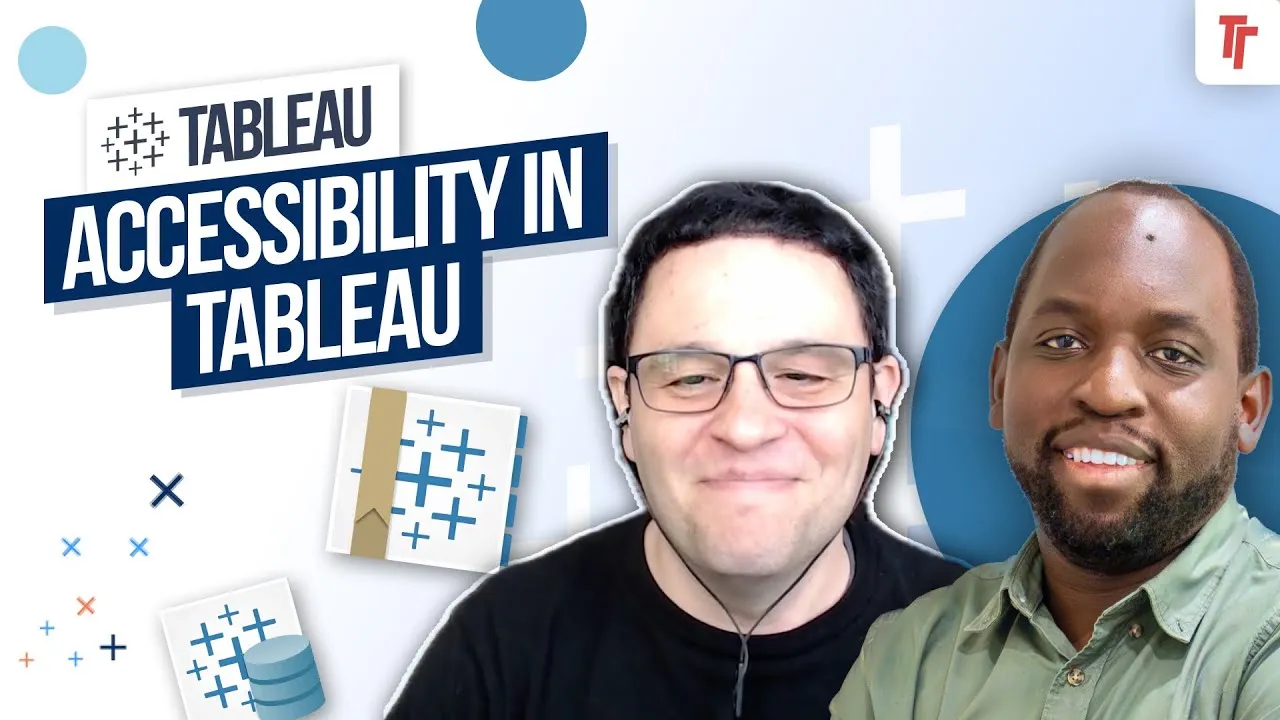
I unbox my YouTube Play Button and Visionary award, then sit down with Sophie Sparkes to explain how the channel really works behind the scenes.
- The YouTube Play Button arrives via Society Awards after a roughly week-long verification once you cross 100,000 subscribers, and team channels can pay to order additional plaques later.
- YouTube has a compounding effect: well-made older videos keep being recommended and outperform newer ones, so only one video I made that year cracked my all-time top ten.
- My channel's niche is bringing people into a topic from zero to sixty rather than advanced tips, which is why I treat all of Tableau as one bucket and rarely do deep dives.
- AI and ChatGPT content outperforms my Tableau videos by three to four times in views, which itself justifies why Tableau is building AI into the product.
- The hardest parts of producing content are planning and editing, not filming, so bringing on help could triple or quadruple output toward a goal of three videos a week.
This is a personal, behind-the-scenes episode rather than a tutorial: Tim unboxes his YouTube Silver Play Button and Tableau Visionary merch, then shares an interview reflecting on how the channel actually grew, what content works, and where he's taking it next.
- Unboxing the Play Button 1:42
Once a channel crosses 100,000 subscribers, YouTube verifies it (about a week) and a company called Society Awards sends the plaque, with a silver award for 100k and gold for a million. Team channels can pay to order extra plaques later using the same credentials, and the name engraved reflects the channel name at time of ordering.
- Tableau Visionary 2024 merch 6:36
The Visionary award has moved from what used to be called a physical rock/"Zenmaster" token to the current stone and branding; Tim notes the value is in what it means to recipients, not the object itself.
- Why the channel's older videos outperform newer ones 10:52
YouTube has a compounding effect: videos that performed well early keep getting recommended and accumulate views for years, while newer videos, even if better made, take time to build that same momentum. Only one video made that year cracked his all-time top ten, which he sees as just how the algorithm rewards existing traction.
- How the channel actually started 11:42
The channel predates Tableau entirely, starting with unrelated tutorials (Adobe InDesign, a CMS), and only found its format in 2019 once Tim had better editing equipment, a clear content plan, and a personal motivation (explaining Tableau simply enough for his mum to understand).
- Lynda.com to LinkedIn Learning, full circle 18:21
Tim originally learned to make videos by watching Lynda.com instructors; years later, after LinkedIn acquired Lynda.com, LinkedIn approached him to build an official Tableau course, which now has tens of thousands of learners and was later repeated with a Snowflake course that's growing even faster.
- Defining the channel's niche 24:04
Tim treats Tableau (desktop, prep, server) as one bucket rather than separate deep-dive topics, deliberately avoiding advanced tips-and-tricks content. The niche is bringing complete beginners from zero to sixty on a topic, which is why the content stays broad rather than granular.
- AI content outperforms Tableau content 27:45
Videos on ChatGPT/AI get three to four times the views of Tableau videos, showing the audience's appetite even if he limits how much AI content he makes to avoid the algorithm reclassifying the channel's identity.
- Scaling output and doubling down on Tableau 31:24
Planning and editing are the real bottlenecks, not filming, so bringing on a contractor could triple or quadruple output toward three videos a week; strategically, Tim plans to keep Tableau central but make future content more agnostic, weaving in infrastructure, Python/R and data best practice around it rather than treating Tableau in isolation.
- The engraved name on the plaque reflects whatever the channel is called at the time you request it, so timing matters if you're planning a rebrand.
- Extra plaques for team channels can be ordered later by paying Society Awards directly, using the original verification credentials.
- Course production (e.g. with LinkedIn Learning) has a long lead time — a course started in April didn't launch until October — because of tight, planned production systems.
- Deliberately not making more AI content, despite it outperforming everything else, is a conscious choice to protect the channel's core identity from the recommendation algorithm.
Watch this if you're curious about the mechanics and trade-offs of running a long-running YouTube/education channel — recommendation dynamics, niche discipline, and the planning-vs-filming bottleneck — rather than for a Tableau technique.
How this Rollup was made provenance & method
A Rollup is drafted by AI from the video's transcript, then reviewed and edited by Tim. Everything used to produce this one is listed below (the model, the exact prompt, and the source video), so the process is transparent and reproducible.
- Transcription
- On-device: NVIDIA Parakeet v3 for recent videos, OpenAI Whisper large-v3 for earlier ones. The transcript never leaves the machine or gets published.
- Drafting
- Claude Sonnet 5 in the cloud, from that transcript.
- Prompt
- The exact Rollup prompt (v2) , the full system prompt, unedited.
- Mode
- Walkthrough: a timestamped breakdown in video order, for a demo or how-to. Written before modes existed, when every Rollup was a walkthrough.
- Source video
- Watch on YouTube
- Drafted
- 5 July 2026 at 09:38
- Reviewed & edited
- 5 July 2026 at 09:41 · by Tim Ngwena
Model + prompt + video is everything you'd need to recreate a Rollup like this yourself. The one thing we don't share is the transcript.
Rights. The video and its transcript are the property of TN Media Ltd. Unauthorised use or download is prohibited. © TN Media Ltd.